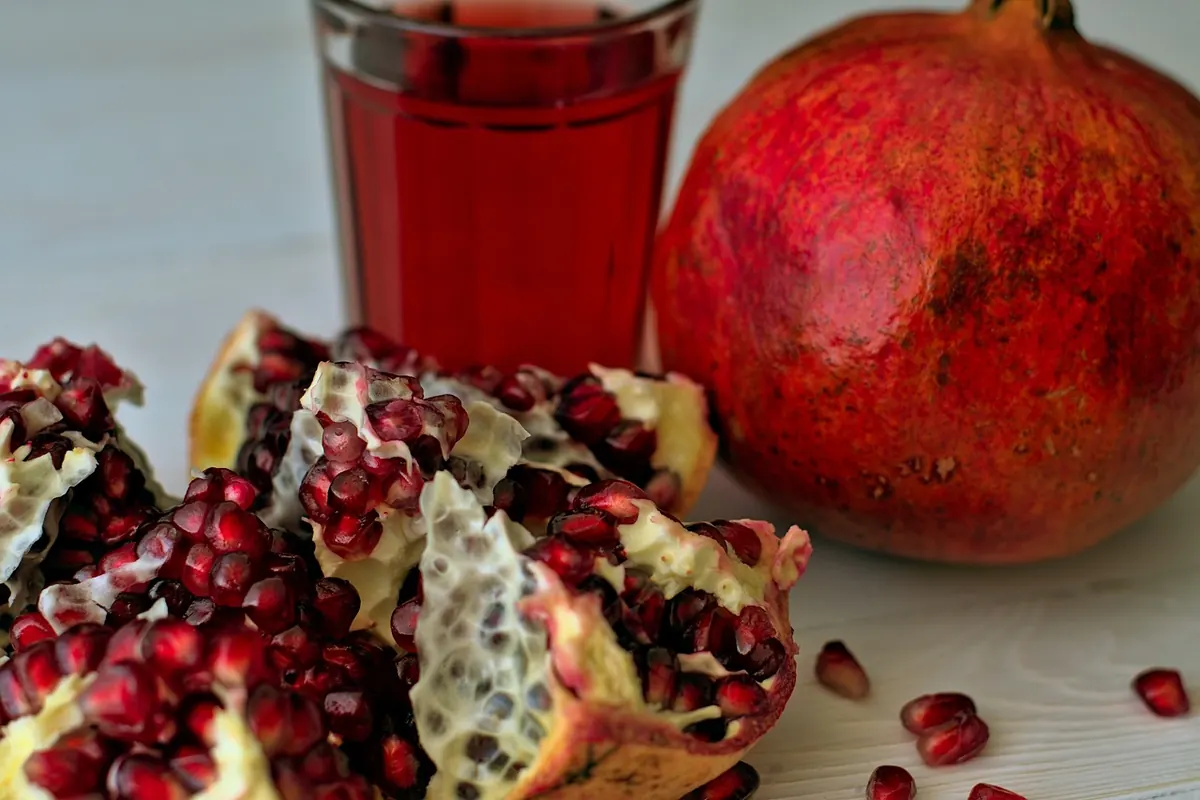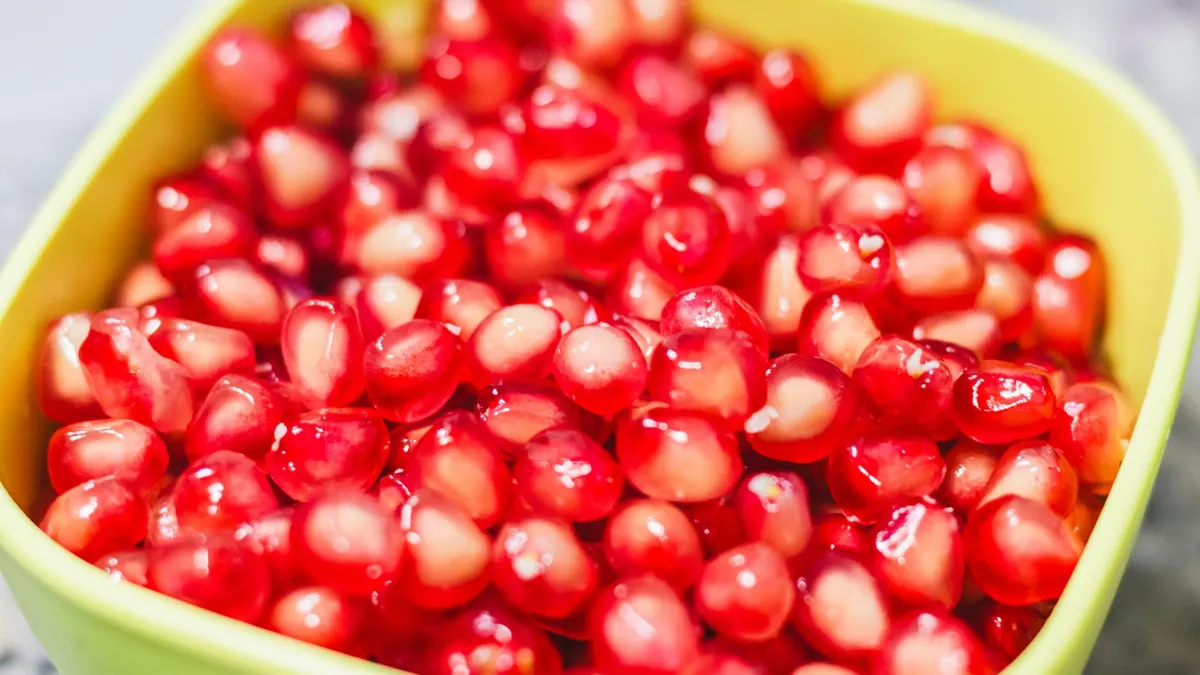
Pomegranate arils are one of the few ingredients that arrive already finished. No peeling, no chopping, no cooking required — just a jewel-bright burst of sweet-tart juice that makes a plate look considered and a drink taste fresher. The catch is that most of us buy a fruit, scatter half of it over a salad, and then leave the rest in the fridge until the arils go soft. This is a guide to using them properly: how to free them without staining your shirt, where they genuinely improve a dish, and how to preserve the overflow so nothing is wasted.
First, Free the Arils Properly
Everything downstream depends on dry, intact arils. Bruised ones bleed juice into whatever they touch and turn limp within a day. The water method is the most reliable, especially for beginners.
- Slice off the crown (the calyx) and just enough of the base so the fruit sits flat.
- Score the skin lightly along the ridges, from top to bottom, following the pale membranes you can see through the skin.
- Hold the fruit over a deep bowl of cold water and pull it apart with your thumbs along the scores. Work in sections rather than forcing it.
- Loosen the arils under water. The good ones sink; the membrane and any broken pieces float and can be skimmed off.
- Pour through a colander, shake well, then spread the arils on a clean towel to dry for ten minutes before storing.
If you prefer speed over neatness, the wooden-spoon method works: hold a scored half cut-side down in your palm over a bowl and whack the back firmly with a spoon. Arils rain out. Do it inside the sink the first time — pomegranate juice stains, and a light spritz of lemon juice followed by cold water lifts fresh marks from most counters and fabrics.
Stored dry in a container lined with paper towel, arils keep four to five days in the fridge. For longer, freeze them in a single layer on a tray, then bag them; they thaw soft but are excellent for juice, syrups and cooking.
Salads That Need a Little Acid and Crunch
Arils earn their place in salads because they do two jobs at once: they add sweetness and they add texture that doesn't wilt under dressing. The rule is to pair them with something fatty, something salty, and something bitter or peppery.
A winter plate of shaved fennel, blood orange segments, arugula and arils, dressed with olive oil, a squeeze of lemon and flaky salt, needs nothing else. Grain salads — farro, barley, bulgur — take arils beautifully alongside walnuts, parsley and a spoonful of yogurt. Roasted squash or beets with arils, tahini and toasted seeds is a reliable cold-weather lunch.
Two practical notes. Add arils at the last moment, after the dressing, so they stay whole and glossy. And if you want their colour to run, muddle a few into the vinaigrette and leave the rest whole for contrast — a trick that makes a plain plate of greens look intentional.
Drinks: From Sparkling Water to Syrup
This is where a single fruit goes furthest.
Quick, no-recipe drinks
- Aril ice cubes. Freeze a few arils in each cube of water or white grape juice. Drop them into sparkling water or a gin and tonic and they release colour as they melt.
- Muddled tea. Crush a spoonful of arils in a mug, add hot black tea and a little honey, and strain if you like. It tastes like a fruit syrup without the sugar load.
- Two-ingredient spritzer. Arils, a squeeze of lime and cold soda over ice. Muddle the arils lightly at the bottom of the glass first.
Shrub, syrup and molasses
A pomegranate shrub is a fridge staple: muddle equal weights of arils and sugar, leave covered overnight, strain, then stir in vinegar — cider or red wine — to taste, roughly half the volume of the syrup. Keeps for weeks chilled and turns any soda water into something worth drinking.
For a grenadine-style syrup, simmer fresh juice gently with sugar until it coats a spoon, cool and bottle. Keep it in the fridge and use it within a couple of weeks. Pomegranate molasses is the same idea taken further: reduce juice slowly, uncovered, to about a quarter of its volume. Low heat, a wide pan and a watchful eye — it goes from syrupy to burnt quickly.
Desserts Where Freshness Matters
Arils are a poor baking ingredient; they collapse and lose their sparkle in the oven. Add them after the heat, always.
Spoon them over thick yogurt with honey and chopped pistachios for a dessert that takes a minute. Fold them into lightly whipped cream with mascarpone and crushed meringue for an instant Eton mess. They cut through the richness of lemon tart, panna cotta, rice pudding and chocolate mousse. A spoonful on top of vanilla ice cream with a drizzle of olive oil is a genuinely good end to a meal.
For something more structured, freeze juice and arils together into a granita, scratching it with a fork every half hour, or fold arils into a semifreddo at the last moment before freezing. Dip dry arils in dark chocolate, set them on parchment and keep them cold — a small, sharp sweet to serve with coffee.
Garnishes With a Purpose
A garnish should add something, not just decorate. Arils bring acidity that lifts fatty dishes: scatter them over hummus or labneh with olive oil, over roast lamb or chicken, over a rice pilaf with saffron, over winter squash soup, over avocado toast.
Pat them dry before using them on anything that shouldn't pool juice — canapés, cheese boards, devilled eggs. A small spoon is the right tool; fingers leave smears. On a cheese plate, they sit naturally with aged sheep's cheese, walnuts and a drizzle of honey.
Preserving the Overflow
When you have more arils than you can eat in four days, choose a direction.
- Freeze. Tray-freeze, then bag. Best for juice, smoothies and cooked sauces.
- Dry. Dehydrate arils until leathery, then grind into a tart powder for rubs and marinades.
- Vinegar. Cover arils with red wine vinegar, leave two weeks in a cool cupboard, strain and bottle. Excellent on bitter greens.
- Jelly. Juice, sugar and lemon, set until firm. Follow a tested preserving recipe for quantities and processing, and if you plan to store jars at room temperature, use reliable water-bath or pressure-canning guidance rather than improvising.
- Molasses. Reduced juice keeps for months in the fridge and does the work of a condiment: dress lamb, sharpen a stew, whisk into a salad dressing.
Any preserved preparation involving long storage is a food-safety matter as much as a flavour one; when in doubt, keep it refrigerated and use it sooner rather than later.
A Workable Weekly Rhythm
Break one fruit at a time, not three. Keep the dry arils in a small jar at eye level in the fridge door, where you will actually see them, and treat them as a finishing ingredient rather than a project: a spoonful on lunch, a handful in a glass, a scatter over dinner. Whatever remains on day four goes into a syrup or onto a tray in the freezer. That rhythm keeps pomegranates in the kitchen as an everyday habit instead of an occasional ornament.
Photo: thiago japyassu / Pexels