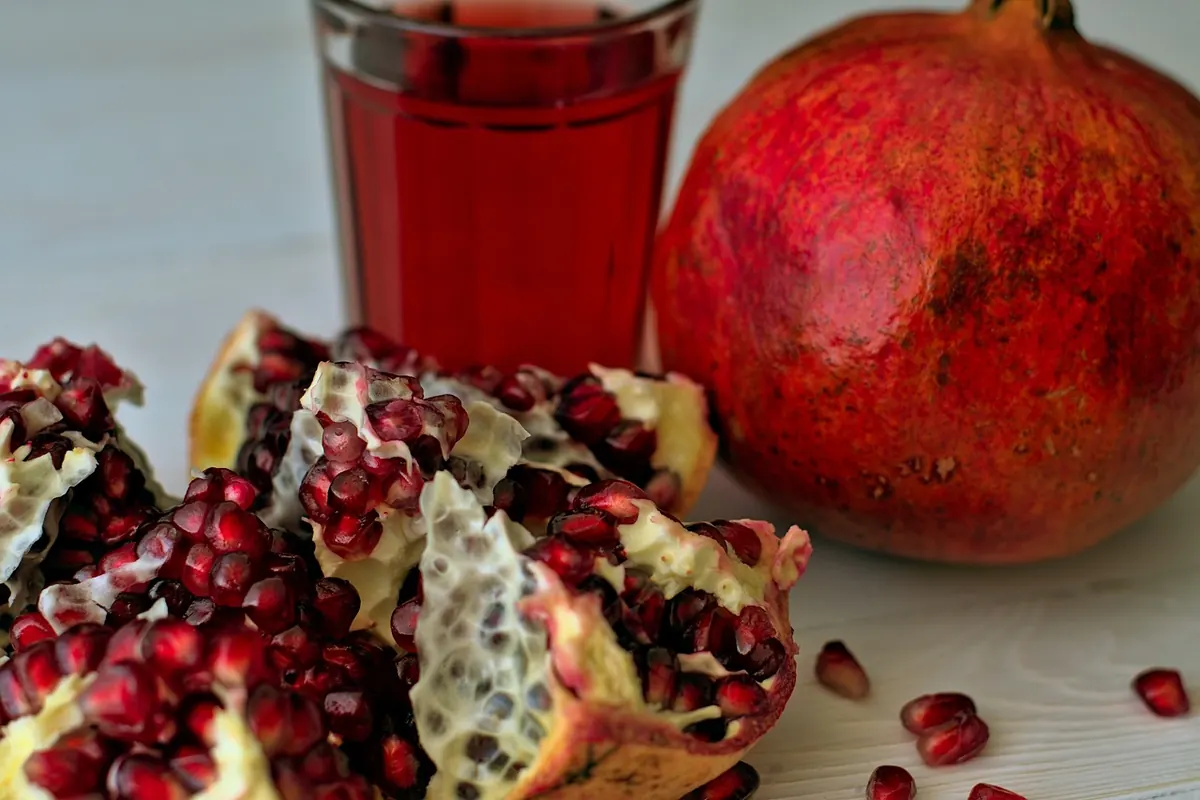
Three bottles can sit on the same pantry shelf and look like relatives: dark red pomegranate juice, syrupy pomegranate molasses, and sharp pomegranate vinegar. They all start with the same fruit, but each has been pushed in a different direction. Juice keeps the fruit’s fresh brightness. Molasses concentrates it into something sweet, sour, and spoonable. Vinegar turns it sharp and preserving. Knowing which one you are holding, and what it will do in a pan, saves a lot of guesswork.
Three products, one fruit
The differences are easiest to remember by what each product is asked to do. Pomegranate juice is the fresh base. Pomegranate molasses is juice that has been cooked down until it is thick and intense. Pomegranate vinegar is juice that has been fermented, or vinegar that has been infused with pomegranate flavor. They are not interchangeable by volume, and they are not even close in strength.
- Pomegranate juice is pressed or extracted from the arils. It is bright, sweet-tart, and perishable. Think of it as a fruit juice first and a cooking liquid second.
- Pomegranate molasses is reduced juice, often with a little sugar and lemon. It is dark, syrupy, and tart. A spoonful seasons a dressing or glaze; a cup would overwhelm it.
- Pomegranate vinegar is acidic and sharp. It belongs in vinaigrettes, marinades, pickles, and pan sauces, where you want lift rather than sweetness.
A useful rule: juice adds liquid and fresh flavor, molasses adds sweetness, tartness, and body, and vinegar adds acid. If a dish tastes flat, vinegar is often the fix. If it tastes thin or harsh, a little molasses can round it out. If it needs both fruit and liquid, start with juice.
Pomegranate juice: the fresh base
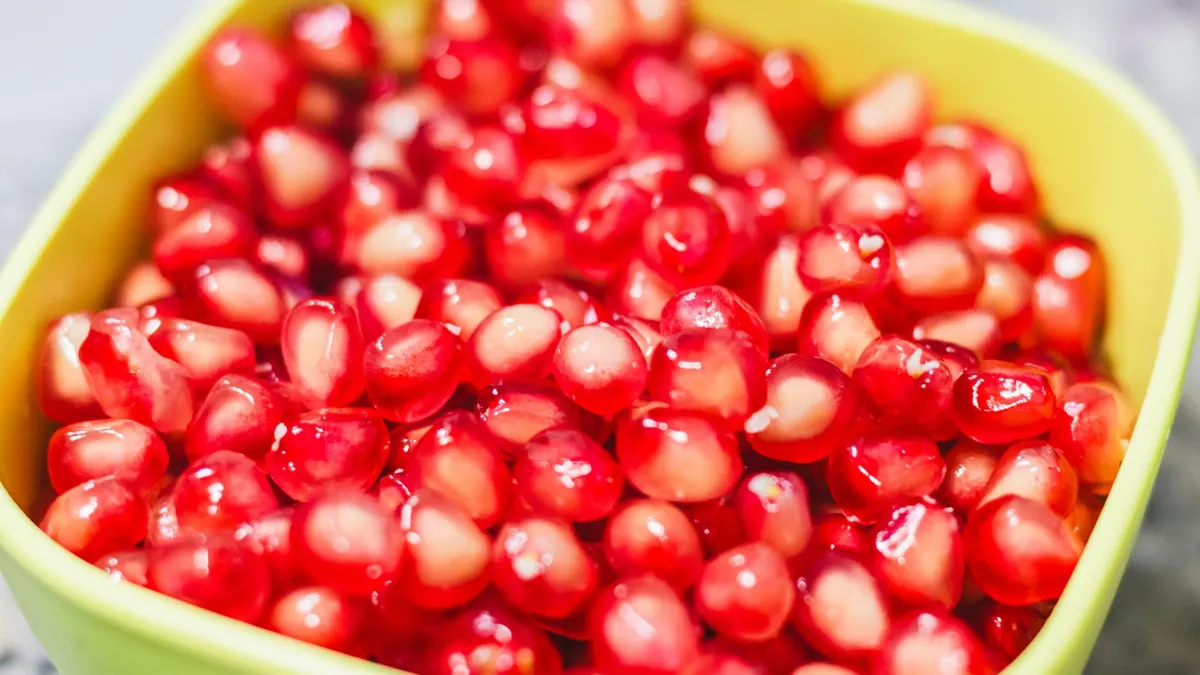
Good juice starts with good arils. Cut off the crown, score the skin into sections, and break the fruit apart in a bowl of water. The pith floats and the arils sink, which makes separation less messy. Pick out any bits of white membrane; they are bitter and will show up in the final taste.
- Pull the arils from the membrane and rinse them briefly.
- Pulse them in a blender in short bursts. Do not run it until the seeds become a paste; the seeds and pith add bitterness.
- Pour the pulpy liquid through a fine-mesh strainer set over a bowl. Press gently with a spoon, then let it drip without forcing it.
- Chill the juice and use it within several days, or freeze it in ice cube trays for cooking.
Fresh juice is lively and slightly acidic. If it tastes flat, a squeeze of lemon can sharpen it. If it tastes too sour, a pinch of sugar will soften the edges. Use it in marinades for chicken or lamb, in salad dressings, in a pan sauce for pork, or simply over ice with a splash of soda. It also makes a good poaching liquid for fruit. For molasses, start with clear, well-strained juice; cloudy juice with too much pith will taste muddy after reduction.
Pomegranate molasses: the slow reduction
Pomegranate molasses is not the same as cane molasses, and it is not a byproduct. It is juice cooked down until its sugars and acids concentrate. Commercial versions may include sugar, citric acid, or lemon, depending on the brand. At home, you control the balance.
A home method
Start with about four cups of pomegranate juice in a wide, heavy saucepan. Add half a cup of sugar if you want a rounder, thicker result; skip it for a tart, more fruit-forward molasses. A tablespoon of lemon juice helps keep the color bright and the flavor clean. Bring the juice to a gentle simmer, then lower the heat. Skim off any foam, stir occasionally, and let it reduce uncovered. It may take forty-five minutes to an hour, depending on the width of the pan and the juice.
Watch it closely near the end. The molasses is ready when it coats the back of a spoon and a line drawn through it holds for a moment. It will thicken further as it cools. Pour it into a clean jar and store it in the refrigerator. If it becomes too thick, loosen it with a spoonful of water or juice. If it is still thin, simmer it a little longer.
In the kitchen, pomegranate molasses is a flavor tool, not a syrup to pour freely. Drizzle it over roasted carrots or winter squash. Whisk it into a dressing with olive oil, lemon, and salt. Use it as a glaze for chicken or lamb, stirring it in near the end so it does not burn. A teaspoon stirred into yogurt adds sweetness and tartness at once. It also works in a marinade with garlic, cumin, and olive oil. Start small; the flavor is concentrated.
Pomegranate vinegar: fermentation or a quick infusion
True pomegranate vinegar is a fermented product. Yeasts turn the juice’s sugars into alcohol, and acetic acid bacteria turn that alcohol into acetic acid. That takes a clean culture, air, time, and attention to acidity. If you want to make true fruit vinegar at home, follow tested instructions and keep notes. It is a rewarding project, but it is not the same as stirring juice into vinegar.
For everyday cooking, a quick infusion is more practical. Pour a mild vinegar, such as apple cider or white wine vinegar, over fresh pomegranate arils and a splash of juice. Refrigerate for a few days to a week, taste, then strain. This is an infused vinegar, not a fermented pomegranate vinegar, but it gives you the fruity sharpness you want in a dressing. Keep it in the refrigerator.
Use pomegranate vinegar where acidity needs to wake up a dish. A simple vinaigrette takes one part vinegar to three parts olive oil, plus salt and a little molasses or honey. Sprinkle it over lentils or roasted beets. Use it to deglaze a pan after searing meat. Add it to a marinade for onions or lamb. It also makes a good base for a drinking shrub: mix it with sugar and soda water. Do not use homemade infused vinegars for shelf-stable canning unless you are following a tested recipe; refrigerate them instead.
Choosing, storing, and swapping
When you buy pomegranate juice, look for a clean fruit taste rather than a lot of added sugar. Molasses should be dark, thick, and tart, not candy-sweet. Vinegar should smell sharp and clean, with a fruit note behind the acid. Store juice in the refrigerator and use it promptly, or freeze it. Keep homemade molasses and infused vinegar in the refrigerator. Commercial molasses and vinegar are often shelf-stable until opened; check the label and follow it.
Swaps work best when you respect their strength.
- No molasses? Simmer pomegranate juice with a little sugar until it coats a spoon. It will not be identical, but it will give you the same sweet-sour direction.
- No juice? Dilute a spoonful of molasses in water for a rough stand-in in marinades or dressings. Do not drink it as juice.
- No pomegranate vinegar? Combine apple cider vinegar with a spoonful of juice or molasses. Taste before adding more.
- Do not swap vinegar for molasses one-for-one. Vinegar is sharp and thin; molasses is sweet, tart, and syrupy. Adjust gradually.
Pomegranate juice and molasses carry natural sugars, so use them as flavorings rather than everyday drinks if you are watching your intake. If you have a medical condition or take medication, ask a qualified professional about regular amounts.
A practical kitchen routine
If you have a box of pomegranates, make juice first. Chill what you will drink or use in dressings. Set a batch on the stove to reduce into molasses while you clean the kitchen, and stir it now and then. With the last cup of juice, make a quick infused vinegar for the refrigerator. Label each jar with the date and what it is. Taste as you cook, start with small amounts, and let the fruit tell you which direction it wants to go.
Photo: 11082974 / Pixabay