Pomegranates have a reputation for toughness, and it is deserved. Give them sun, decent drainage and a little patience and they will often reward you with years of glossy foliage and heavy, leathery fruit. The trouble is that the plant's tolerance hides small errors for a long time. A tree planted an inch too deep, or watered on a generous schedule, may look perfectly fine for a season before it starts to sulk. By then the cause is usually underground, which is exactly where most growers forget to look.
The good news is that the list of things that go badly wrong is short, and most of the items on it are easy to correct. What follows is the set of mistakes we see most often, along with the fixes that make a real difference.
Planting too deep, and other planting-day errors
This is the quiet one. Pomegranates are usually sold as own-rooted plants grown from cuttings, so there is no graft union to guide you, and it is tempting to bury the root ball just a little deeper than it sat in the nursery pot. Don't. Burying the crown, the point where the trunk widens into the roots, traps moisture against bark that is not built for it. The result is slow decline, soft bark and a steady stream of suckers pushing up around a trunk that never quite thickens.
Set the plant so the top of the root ball sits level with the surrounding ground, or slightly proud of it if your soil is heavy. You should be able to see the flare where trunk meets root. Dig a hole two to three times as wide as the root ball but no deeper, and backfill with the soil you removed rather than a pocket of rich compost that holds water differently from the surrounding ground.
- Check the flare: after planting and watering, firm the soil and confirm the crown is still visible.
- Skip the mulch volcano: keep mulch a hand's width away from the trunk.
- Water to settle, not to drown: one slow, thorough soak to close air pockets, then wait.
- Plant at the right time: spring once frost has passed, or autumn in mild climates where roots can work through winter.
- Stake only if needed: a short stake for the first season, removed once the plant stands on its own.
Overwatering: the kindness that kills
Pomegranates are Mediterranean in temperament. They evolved with dry summers and limited rainfall, and their roots handle drought far better than they handle constant moisture. Overwatering is the single most common cause of young plants failing, and it rarely looks like overwatering from above. The leaves yellow, often starting low on the plant. New growth is thin. The plant may wilt in the afternoon even though the ground is wet. Dig down fifteen centimetres with a hand trowel or a long screwdriver and you will find cold, clumping, sour-smelling soil.
The fix is a rhythm rather than a schedule. Water deeply, then let the top layer dry out before you water again. A young plant in its first two summers needs more attention than an established one; once a pomegranate has been in the ground for three or four years, a deep soak every two to three weeks through a dry summer is often plenty, and less in cooler or heavier soil. In containers, the rules change: check the top few centimetres before watering, and never let the pot stand in a full saucer.
A quick test before you reach for the hose
Push a finger into the soil just outside the drip line. If it is cool and damp two knuckles down, wait. If it is dry and crumbly, water properly, meaning slowly and long enough that moisture reaches below the root zone rather than running off the surface.
Poor drainage: the problem underneath the problem
If water pools in the planting hole an hour after you fill it, you have found your real issue. Pomegranates tolerate a wide range of soils but they will not tolerate a bathtub. Heavy clay, a compacted layer from construction, or a hole dug into clay that acts as a sump will all hold water against the roots through winter, and root rot follows.
In heavy ground, plant on a low mound of native soil and let the roots spread outward into the surrounding earth instead of sitting in a bowl. A raised bed works well where drainage is genuinely poor. For containers, use a gritty, free-draining mix, confirm the drainage holes are open, and lift the pot onto bricks so water can escape. On a slope, plant into a shallow terrace rather than a deep pocket, and direct runoff away from the trunk.
Wrong site and wrong variety
Some problems cannot be pruned away. Pomegranates need full sun, and in most climates that means six to eight hours of direct light, with as much summer heat as your site can offer. Fruit ripens slowly, and a plant in partial shade will flower, set a little fruit and then fail to bring it home before the season closes.
Cold is the other half of the equation. The plants are reasonably cold-hardy once established, but young ones and active new growth are vulnerable to hard frost, and late frost can strip a spring flush of flowers overnight. Choose a sheltered spot, avoid low frost pockets at the bottom of a garden, and pick varieties that ripen early if your summers are short or cool. Ask at a local nursery which types perform in your area rather than ordering on appearance alone; a late-ripening variety in a marginal climate is a reliable source of disappointment.
Feeding mistakes: too much nitrogen, too little mulch
Pomegranates are light feeders, and the most common error is generosity. A heavy dose of nitrogen, especially from lawn fertiliser spread too close to the tree, produces a mass of soft green growth, few flowers and a plant that aphids find irresistible. Feed lightly in spring as growth begins, using compost or a balanced feed at modest rates, and stop by midsummer so new growth has time to harden before winter.
Mulch does more for a pomegranate than any bag of fertiliser. A layer of well-rotted organic matter over the root zone conserves moisture, moderates soil temperature and slowly feeds the soil. Keep it a hand's width from the trunk and top it up each spring.
Pruning at the wrong time, and too hard
Pomegranates flower on new growth that emerges from older wood, so every branch you remove is potential fruit. Two mistakes follow from that. The first is timing: prune in late winter while the plant is dormant and after the worst frost risk has passed. Pruning in autumn leaves fresh wounds open through the cold, and pruning in spring while the plant is flowering removes the very wood you were waiting for. The second mistake is severity. Cutting a pomegranate back hard every year keeps it tidy and keeps it fruitless.
Aim for light annual shaping instead. Remove dead, damaged and crossing branches, take out suckers crowding the base, and keep three to five strong main stems if you are growing a bush form. Step back often. If you can see through the plant and light reaches the centre, you have probably done enough.
Fruit problems: splitting, dropping and picking too early
A split fruit is almost always a watering story. Skin stretches as the fruit swells, and if the plant goes from dry to suddenly wet, whether from a heavy rainstorm or a forgotten hose, the skin cannot keep up. Consistent moisture through the ripening period does more than anything else to reduce splitting, and picking before a forecast downpour saves fruit that would otherwise crack.
Some flower drop is normal; pomegranates produce many more flowers than they can carry, and only a fraction set fruit. Pick when the skin has deepened in colour, the fruit feels heavy for its size and it twists off the branch with a slight pull rather than hanging on. Fruit left too long in wet autumn weather loses condition quickly.
What to fix first
If you are troubleshooting an unhappy pomegranate, work in this order: check the planting depth and the crown, then check drainage, then test the soil before watering again. Those three cover most failures. After that, look at light, feeding and pruning timing. Correct the fundamentals and the plant usually does the rest, with very little encouragement from you.
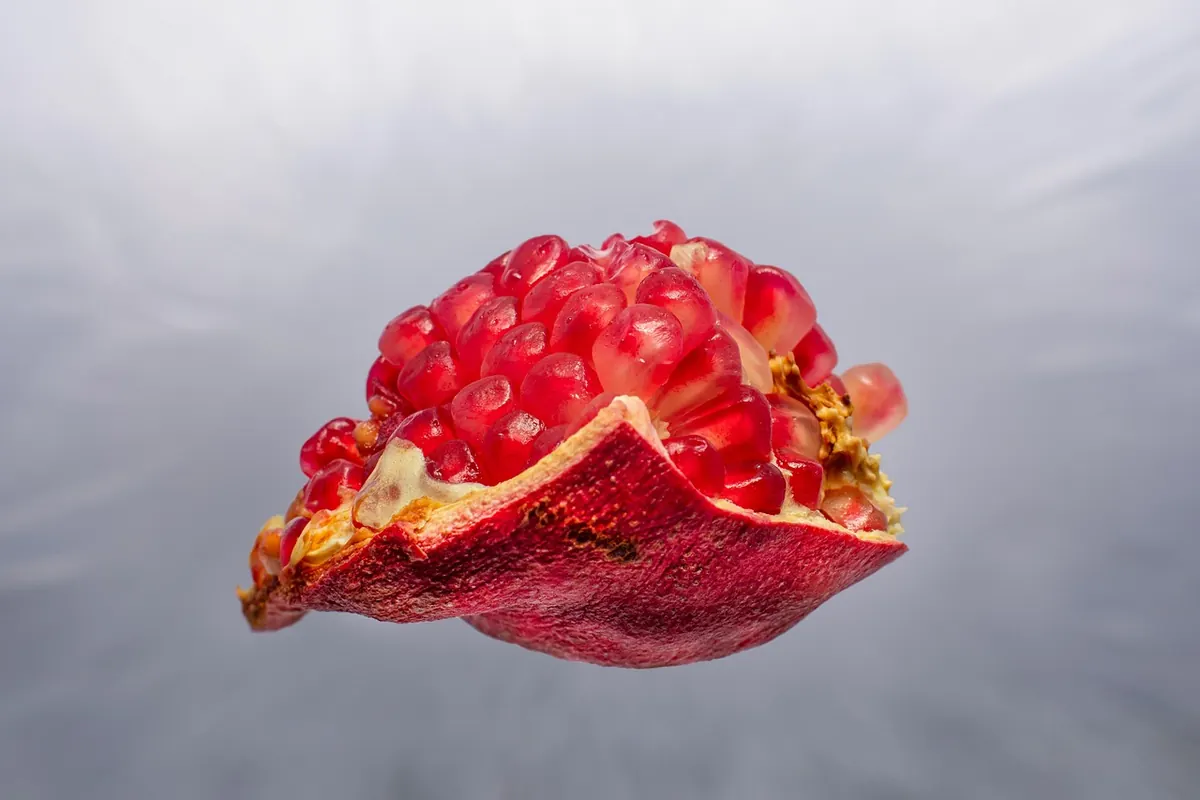
Photo: Erik_Karits / Pixabay