Few fruits guard their secrets as well as the pomegranate. A skin can be scarlet and the arils inside still pale and sharp. Another fruit, half green in the shade, can be packed with dark, sweet juice. Color is the first thing we notice and the last thing we should trust on its own. Ripe pomegranates announce themselves in other ways: in the weight of the fruit in your palm, the sound it makes when you tap it, and the way its roundness settles into soft angles. Read those signs together and you will pick closer to the right moment, season after season.
What Skin Color Can and Cannot Tell You
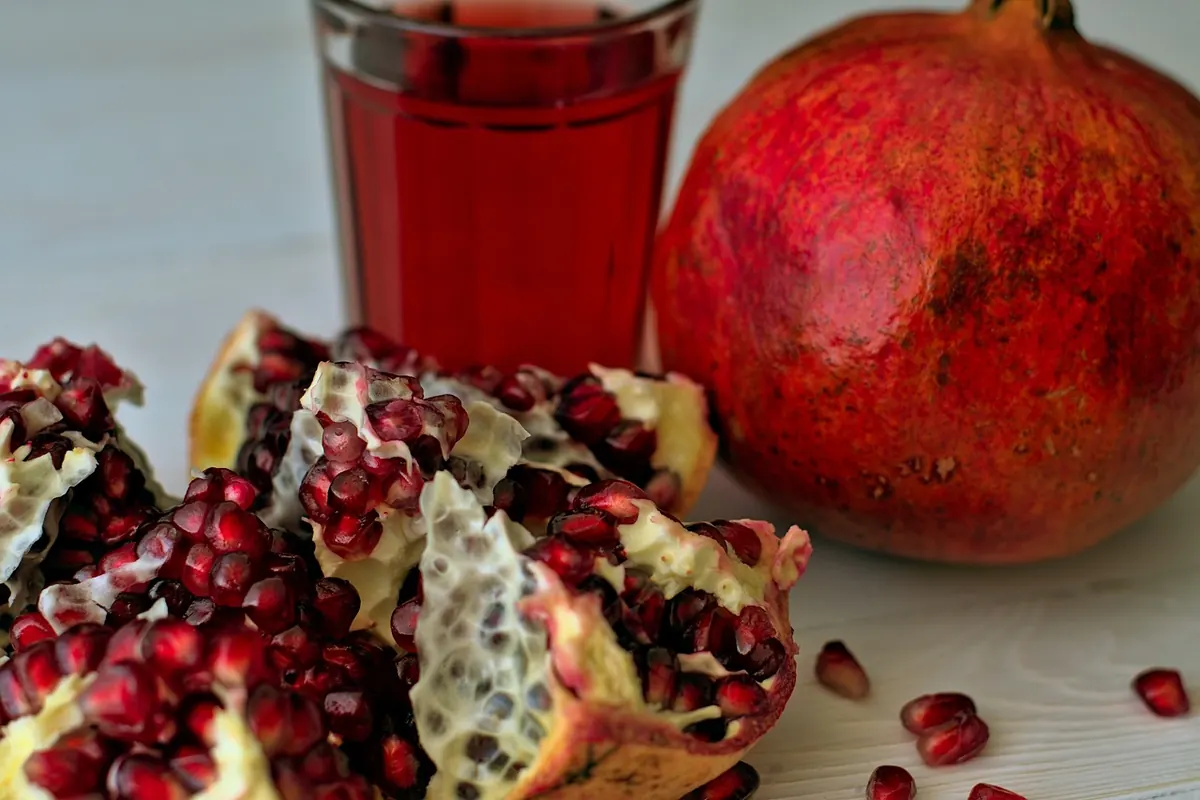
Pomegranates move through a predictable sequence: green, then a yellowish flush, then blush, then the deeper red or pink that most of us picture. What you are waiting for is not maximum red but settled color. The green undertone should be gone, and the skin should look matte and faintly leathery rather than glossy and stretched.
Beyond that, color is a rough guide at best. The sun-facing side of a fruit colors first while the shaded side lags behind, so a single pomegranate can look half finished for weeks. Fruit tucked inside the canopy often ripens later and stays paler. And plenty of varieties never turn truly red at all; some stay pink, some bronze, a few keep a greenish shoulder even when the arils inside are perfect. If you grow more than one cultivar, judge each one by its own standard rather than by the reddest fruit on the tree.
Watch for sunburn too. A patch of pale, papery, slightly sunken skin on the hottest side means the fruit took heat damage, not that it is ready.
The Tap Test: Listening for Metal
This is the skill worth practicing. Cup a fruit in one hand and tap the side of it with the knuckles of the other, then listen.
- Ripe: a light, faintly metallic ring, slightly hollow, almost tinny. The sound sits high and stops quickly.
- Unripe: a dull, heavy thud, like tapping a potato. The fruit feels and sounds solid because it is still mostly skin and pith.
- Overripe or damaged: a flat, dead thump with no ring at all. Cut one of these open before trusting the rest.
Tap several fruits from different branches in a quiet moment, ideally in the morning. Your ear calibrates fast. After twenty pomegranates you will start to hear the difference before you have consciously decided anything, and the metallic ones will stand out the way a glass does among ceramics.
Shape and Weight: Angular Means Ready
A young pomegranate is round and smooth because there is still space inside. As the arils swell they press against one another and against the skin, and the fruit takes on a subtly boxy silhouette. The sides flatten. Gentle ridges appear where the chambers push outward. The shoulders near the crown look squared off rather than domed. That angularity is one of the most dependable signs you will get.
Weight matters, but read it carefully. A ripe pomegranate feels heavy for its size, a clear sign of juice rather than dry pith. Heavy is not the same as sweet, though. A tree that has been watered generously right up to harvest will produce large, weighty fruit with washed-out flavor. Use heft as a supporting clue, never as the deciding one, and let color and sound overrule it.
Timing the Harvest: Variety, Weather, and the Calendar
Pomegranates generally need somewhere around five to seven months from flowering to ripe fruit, which is why the late flowers on a tree produce the late crop. In a Mediterranean-type climate the harvest usually runs from late summer into late autumn: early varieties in late August and September, mid-season types through October, and late varieties stretching into November. Cool nights in the final weeks help both color and sugar.
Weather can compress or stretch that window. A dry spell followed by heavy rain is the classic cause of split fruit, and a split pomegranate will not improve by waiting. If a real soaking is forecast and your fruit is already close, pick the ripest specimens beforehand and leave the rest. Picking in the cool of the morning also gives you fruit that stores better.
Open One Before You Commit
No indicator beats tasting. Pomegranates do not ripen further once picked, so the fruit on your kitchen counter will be exactly as good in a week as it was the day you cut it. Sacrifice one fruit from the tree, not one from the ground.
Slice off the crown, score the skin along the ridges, and pull the fruit apart in a bowl of water so the loose arils sink and the pith floats. Then look and taste.
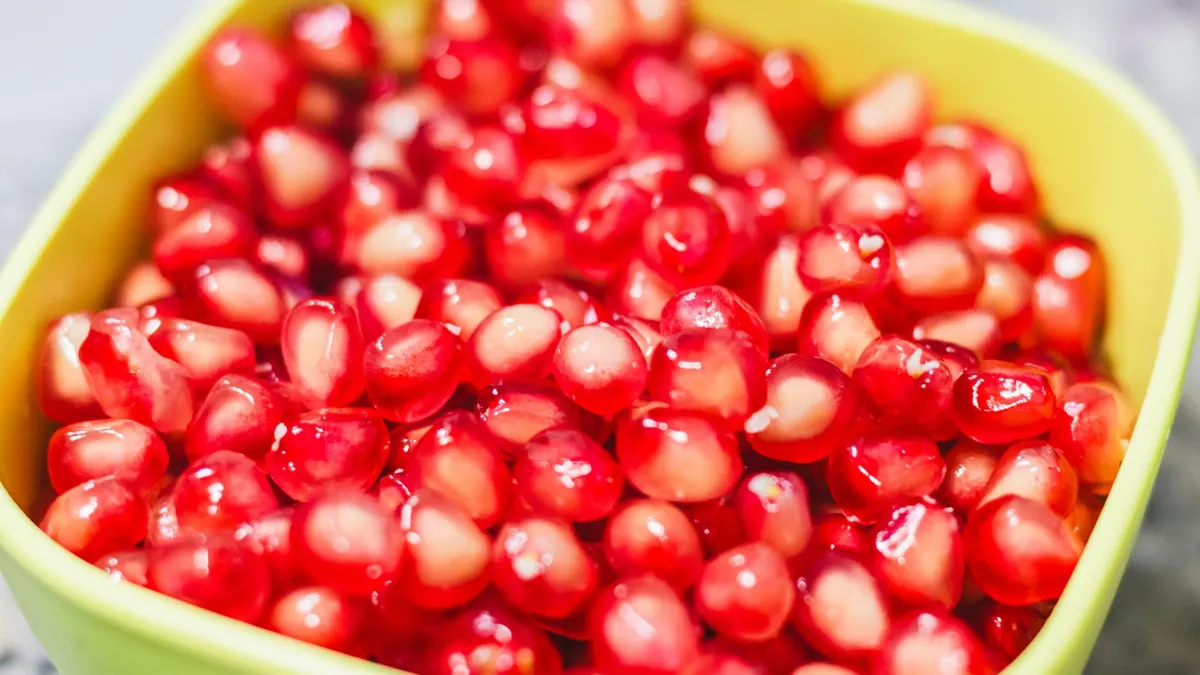
- Arils plump and tightly packed, with no air gaps in the chambers.
- Deep, even color through the flesh, and juice that stains your fingers.
- A clean snap when you bite, then sweetness with enough acidity to taste like something.
If the arils are pale, small, or sharply sour, give the tree another week and taste again. Write down the date and the variety. After two or three seasons you will know your own trees' rhythm better than any general rule can tell you.
Picking and Handling Without Bruising the Crop
The fruit bruises easily, and a bruise becomes rot within days. Handle it as you would a ripe peach.
- Choose a dry morning and clip the stem with pruners, leaving a short stub. Never pull or twist the fruit off the branch.
- Lower each fruit into a basket instead of dropping it, even from a short height. Burst arils inside an intact skin are invisible until the mold appears.
- Do not wash the fruit before storing; moisture at the crown invites trouble. Wipe it clean instead.
- Store in a single layer in a cool, dark, airy place, or in the refrigerator for longer keeping. Whole fruit holds for several weeks cool and considerably longer chilled.
- Set aside any fruit that split or bruised and use it first.
A Field Checklist for Picking Day
- The green undertone has left the skin, and the surface looks matte.
- The fruit is angular, with flattened sides and squared shoulders.
- It rings faintly metallic under your knuckles, not dull.
- It feels heavy for its size in the hand.
- One sacrificial fruit opened on the branch tastes sweet and full.
Take your time with the first picks of the season. Walk the tree twice, tap, feel, and compare, and only then fill the basket. The pomegranate rewards that patience with fruit that tastes of the whole summer behind it.
Photo: RitaE / Pixabay