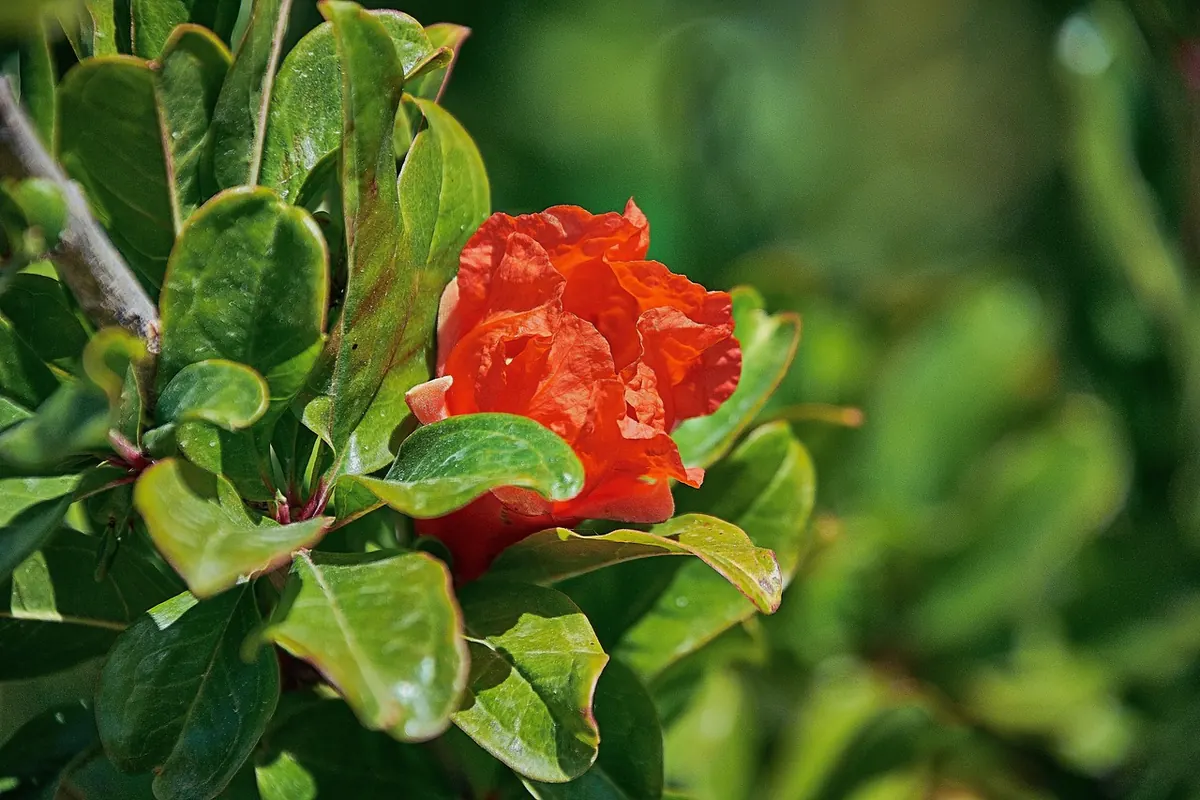
A pomegranate in full bloom is one of the orchard’s best sights. The flowers are vivid, the bees are busy, and the season feels full of promise. Then the ground turns pink. Flowers fall in handfuls, and the fruit you imagined seems to disappear before it has even formed. Before you reach for a spray or a bag of fertilizer, take a closer look. Pomegranates shed flowers for several reasons, and some of that drop is completely normal. The useful question is not “How do I stop every flower from falling?” but “Is this normal shedding, or is something in the orchard asking for attention?”
Not Every Dropped Flower Is a Problem
Pomegranates produce more than one kind of flower. The ones that can become fruit are perfect, or hermaphroditic, flowers. They have a swollen base—the future fruit—and a long style that reaches up to receive pollen. The other flowers are functionally male. They carry pollen, but their style is short and they cannot set fruit. They open, feed pollinators, and drop. That is not a failure; it is part of the plant’s design.
So the first diagnostic step is simple. During bloom, pick up a few fallen flowers and look at their bases and styles. If most of the drop is male flowers, the tree may be behaving normally. If perfect flowers are falling in large numbers, or if small fruitlets turn yellow and drop after the petals fall, look at water, nutrition, pollination and weather. A heavy flush of male flowers is also common on young trees that are still building strength. Give them time, but keep the rest of the orchard in good order.
Pollination Gaps: When Flowers Open but Fruit Never Sets
Pomegranates are largely self-fruitful, which means a single tree can often set fruit with its own pollen. That does not mean pollination is automatic. Pollen still has to move from the stamens to the stigma of a perfect flower, and insects do most of that work. Bees, bumblebees and solitary bees visit pomegranate flowers for pollen and nectar. If they are absent during the short bloom window, many perfect flowers will open, fade and fall without setting fruit.
Weather can create a pollination gap even when bees are present. Rain keeps insects in shelter and can wash pollen from flowers. Strong, dry wind can dry out stigmas. A short heat wave can shorten bloom life and reduce pollen viability. Insecticide sprays during bloom are another common own goal, because they can remove the very insects that carry pollen. If you grow several cultivars that flower at the same time, pollen movement between them can sometimes improve set, though pomegranates do not require a partner tree in the way some fruits do.
For a small planting, hand pollination is worth trying when pollinators are scarce. Use a soft, clean brush. Touch it lightly to the stamens of a freshly opened flower, then to the stigma of a perfect flower. Work in the morning when pollen is fresh. It is slow work on a large orchard, but on a few trees it can make a visible difference.
Water Stress and the Flower Drop Signal
Pomegranates are drought tolerant once established, but flowering and fruit set are not the moment to test that tolerance. The tree is carrying flowers, building pollen and trying to hold tiny fruitlets. A dry spell during this period can trigger a protective response: drop the flowers and save the water for survival. The same thing can happen in reverse with waterlogging. Roots that sit in saturated soil cannot take up water properly, and the tree may shed flowers even though the ground is wet.
Aim for steady moisture from budbreak through fruit set. Water deeply when the top few inches of soil begin to dry, then let the soil breathe before watering again. Sandy soils will need more frequent watering than clay soils. Mulch around the tree, keeping it a little away from the trunk, to slow evaporation and keep soil temperature even. Drip or ground-level irrigation is better than overhead watering during bloom, because dry flowers and leaves are less likely to develop problems. Avoid the pattern of long dry spells followed by a heavy soak; consistency matters more than volume.
Nutrient Imbalance: Too Much of One Thing, Too Little of Another
Nitrogen is the usual suspect when a pomegranate produces plenty of leaves and few fruit. Too much nitrogen pushes soft vegetative growth at the expense of flowering and fruit set. A tree that has been fed heavily with a high-nitrogen fertilizer, or that sits next to a heavily fertilized lawn, may drop perfect flowers even while it looks lush and healthy. Stop heavy nitrogen feeding around bloom. If you fertilize, use a balanced product in early spring and let the tree’s growth tell you whether it needs more.
Phosphorus and potassium support flowering and fruit development, and micronutrients such as boron and zinc play a role in flowering and pollen health. But more is not better. Boron, in particular, can be toxic if overapplied. The sensible approach is a soil test, and a leaf test where available, before correcting a suspected shortage. Check soil pH as well, because nutrients can be present but unavailable if the pH is far outside the range pomegranates prefer. Compost and mulch feed soil life and improve nutrient availability over time, which is often more useful than chasing a quick fix.
Other Triggers Worth Checking
Weather is not always kind. A late frost can damage flowers, and a sudden heat wave can cause perfect flowers to dry and drop. Pests such as thrips and aphids can feed on flowers and tender growth, while fungal problems during wet bloom can damage developing fruit. Inspect flowers and leaves closely rather than guessing. Pruning also matters. A tree that is too dense shades its interior, and shaded flowers are weaker. Heavy pruning during bloom removes flowers directly, so keep major structural work for the dormant season.
Tree age and energy play a part too. Young trees often drop most of their flowers in their first few fruiting years. A tree that carried a heavy crop last season may have less energy to set another one. Container trees can suffer from root restriction and uneven moisture. None of these causes work alone. A dry tree with poor pollination and too much nitrogen will drop more flowers than a tree with one manageable problem.
A Practical Plan to Improve Fruit Set
Work through these steps during bloom and the weeks that follow. You do not need to do everything at once, but you do need to look before you act.
- Identify the flowers. Check fallen flowers for swollen bases and long styles. Separate normal male-flower drop from perfect-flower drop.
- Watch the pollinators. Spend ten minutes at midday during bloom and count the insects working the flowers. If you see very few, improve habitat and avoid insecticide sprays during bloom.
- Keep moisture steady. Water deeply when the soil begins to dry, then let it drain. Mulch to even out moisture and protect roots.
- Test before feeding. A soil test is more useful than a guess. Correct pH and major nutrient problems first, and avoid heavy nitrogen around bloom.
- Open the canopy. Prune for light and airflow in the dormant season. Remove dead wood and crossing branches, but do not strip the tree bare.
- Handle pests early. Check flowers and new growth for thrips, aphids and fungal spots. Treat the specific problem you find, not the whole orchard on a schedule.
- Try hand pollination on small trees. Use a soft brush in the morning when pollinators are scarce or weather has been poor.
- Keep notes. Record bloom dates, weather, irrigation, fertilizer and the amount of drop. Patterns become clear over two or three seasons.
Watch, Adjust, and Give the Tree Time
Fruit set is not a single event. It is the result of many small conditions lining up: good flowers, active pollinators, steady water, balanced nutrition and a tree with enough energy to carry a crop. Do not judge the season by one bad week of drop. If most of the fallen flowers are male, the tree is doing what pomegranates do. If perfect flowers are falling, fix the most likely cause first, then wait. Trees respond slowly, and a change made this spring often shows its value next season. Keep your notes, compare them with what you see, and let the orchard tell you what it needs.
Photo: Gerhard_Romero / Pixabay